
How to Choose Quality Lifestyle Accessories Worth the Price
Last Updated: October 25, 2026
Quick Summary
Quality lifestyle accessories are worth paying more for when you use them daily and they're built with better materials, tighter construction, and thoughtful design that lasts years instead of months. The real value comes from durability, repairability, and lower cost-per-wear over time, not from branding or trends.
- Run the four-point quality check: examine construction integrity, verify material honesty on labels, test hardware and closures, and confirm the item can be repaired rather than replaced.
- Buy quality for daily-use, low-loss-risk items like everyday bags and frequently worn jewelry; choose budget options for occasional use, trendy pieces, and high-loss-risk travel accessories.
- Quality materials feel different: real leather is supple, metal hardware is substantial and smooth, stitching is even and tight, and seams are reinforced at stress points.
- Proper care extends lifespan: store items correctly, clean regularly with appropriate products, keep moisture away, rotate pieces, and address damage early before it spreads.
Table of Contents
- Why Quality Lifestyle Accessories Matter More Than You Think
- Are Expensive Accessories Worth It: The Real Value Proposition
- How to Choose Quality Fashion Accessories: What Sets Premium Pieces Apart
- Cost Per Wear for Accessories: Calculating True Investment Value
- How to Care for Fashion Accessories and Extend Their Lifespan
- When Budget Accessories Make Sense
- Building Your Accessory Collection at HJ Accessories
- Frequently Asked Questions
Why Quality Lifestyle Accessories Matter More Than You Think
When you buy a cheap belt, it cracks. The buckle breaks. You're back shopping in three months. A quality belt lasts years.
This is the real reason people pay more for lifestyle accessories. It's not about status or trends.
The question isn't whether expensive accessories are worth it. The question is whether you're buying the right ones for your needs.
Are Expensive Accessories Worth It: The Real Value Proposition
Expensive accessories cost more because they're built differently. Better materials, tighter construction, and thoughtful design all add up.
The honest answer is context-dependent. A $15 phone case that protects your device is worth more than a $50 case that looks pretty but fails when you drop it.
What you're actually paying for:
- Materials that hold up to regular use
- Construction methods that prevent seams from splitting
- Hardware that doesn't rust or break
The real value proposition of quality accessories is this: they do what they're supposed to do, for as long as you need them to. That reliability is worth money.
How to Choose Quality Fashion Accessories: What Sets Premium Pieces Apart
The best way to spot quality is to look at how something is made, not just what it costs. Most top-ranking articles stop at "look for good stitching." That advice is true but incomplete.
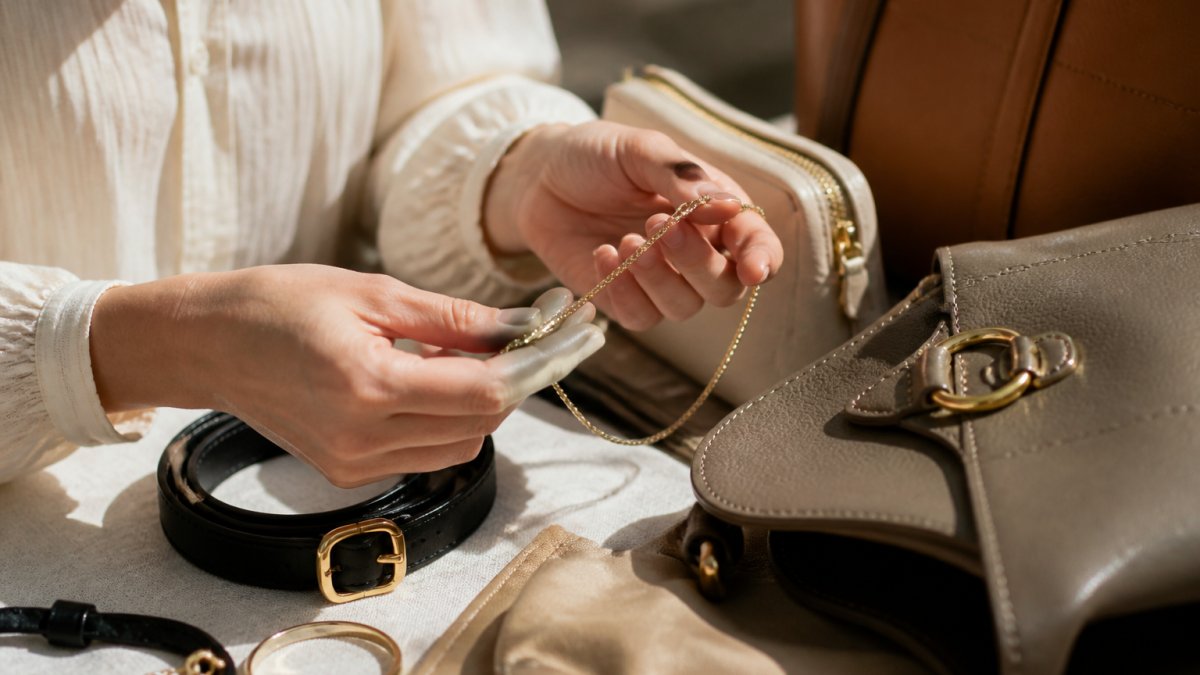
Materials and Construction
Quality materials feel different. Real leather is supple and develops character over time. Cheap leather is stiff, cracks, and peels. Metal that won't tarnish is heavier and smoother than plating that flakes off.
Look for these signs of quality:
- Stitching is even and tight, not loose or wavy
- Seams are reinforced, especially on bags and straps
- Hardware feels substantial and moves smoothly
The material itself matters less than how it's treated. A well-made cotton accessory outlasts a poorly made silk one. The question isn't "is this expensive material?" but "is this material properly finished and assembled?"
The Four-Point Quality Check
Before you accept a premium price, run the item through four checks. Each one tells you whether the extra cost is doing real work.
- Construction integrity. Turn the item inside out. Are interior seams finished, or are they raw and fraying? Are stress points, where a strap meets a bag, where a clasp meets a chain, reinforced with stitching, rivets, or bar tacks? A premium piece should look as carefully made on the inside as on the outside.
- Material honesty. Read the label and feel the surface. Full-grain leather, solid brass, and tightly woven natural fibers behave differently from bonded leather, plated zinc, and loose synthetic weaves. If the listing or tag is vague about materials, treat that as a warning sign rather than a neutral detail.
- Hardware and closures. Open and close every zipper, clasp, and buckle several times. Quality hardware moves smoothly, has a satisfying weight, and shows no sharp edges. Flimsy hardware is one of the most common failure points on otherwise decent accessories, and it is expensive to replace.
- Repairability. Ask whether the item can be repaired rather than replaced. Can a cobbler re-stitch the seam? Can a jeweler re-set the stone or replace the clasp? Can the brand supply replacement parts? A premium price is far easier to justify when the item is designed to be maintained rather than discarded.
Craftsmanship Details
Craftsmanship is visible if you know where to look. Open a bag and check the interior. Are the edges finished neatly? Is the lining secured properly?
For jewelry, examine the clasp. Does it close smoothly? Is the setting secure? Can you wiggle the stone?
Premium accessories often have:
- Finished edges on all interior surfaces
- Reinforced attachment points
- Consistent quality throughout, not just on the visible side
These details cost more to create because they require time and skill. That's why they matter.
What Premium Pricing Usually Signals, and What It Doesn't
A higher price can reflect better materials, tighter construction, and longer expected lifespan. It can also reflect marketing spend, limited-edition positioning, or a designer name. The four-point check helps you tell the difference.
That distinction is the heart of the value question. Paying more makes sense when the extra cost maps to something you will actually experience, fewer failures, longer use, easier repair, and makes less sense when it maps only to how the item looks in a photograph.
Cost Per Wear for Accessories: Calculating True Investment Value
Here's the math that actually changes your perspective on spending more.
A $30 accessory you wear twice is $15 per wear. A $150 accessory you wear 150 times is $1 per wear. The expensive one becomes the bargain.
Calculate cost per wear like this:
- Estimate how many times you'll actually use the item
- Divide the price by that number
- Compare across options you're considering
A bag you carry every day for two years gets used 700 times. A $100 bag costs 14 cents per wear. A $30 bag used 100 times costs 30 cents per wear.
The items worth spending more on are the ones you use constantly. The items worth buying cheap are the ones you rarely touch.
How to Care for Fashion Accessories and Extend Their Lifespan
Quality accessories last longer when you treat them right.
Basic care prevents most damage:
- Store items properly, don't cram a nice bag into a closet
- Clean leather and metal regularly with appropriate products
- Keep moisture away from electronics and delicate materials
Many people think quality items need complicated maintenance. They don't. A leather bag needs occasional conditioning. Metal jewelry benefits from a gentle cleaning. Tech cases just need to stay dry and avoid extreme temperatures.
The goal is simple: keep your accessories in the condition they were in when you bought them. That's how a quality piece becomes a long-term investment instead of a short-term expense.
When Budget Accessories Make Sense
Not every accessory deserves premium pricing. Sometimes budget options are the smarter choice. The trick is knowing when, and having a simple rule for deciding before you buy.
A Simple Decision Rule
Ask three questions before paying a premium:
- How often will I use it? Daily use justifies investment. Occasional use rarely does.
- How likely is it to be damaged or lost? Items that take heavy wear, get tossed in a bag, or are easy to misplace are poor candidates for premium spending.
- How stable is my taste in this category? If you are still experimenting with a style, a budget piece lets you learn cheaply.
If the answer to the first question is "rarely" and the second is "very likely," buy budget. If the first is "constantly" and the second is "unlikely," a premium piece is easier to justify.
Buy Budget When:
- You're trying a style you've never worn before
- The item serves a temporary purpose
- You use it rarely or seasonally
A trendy accessory you'll wear for one season doesn't need to last five years. A backup phone case for occasional use doesn't need premium protection. A statement piece you're not sure about shouldn't cost $200 until you know you love it. Travel accessories that get crushed in luggage, festival jewelry, and fast-changing trend pieces are all sensible budget buys.
Consumer Reports on evaluating product durability emphasizes that smart spending means matching price to actual need. A budget accessory that does its job perfectly is smarter than overspending on features you don't use.
The Middle Path: Spend Where It Counts
Most people do not need an all-premium or all-budget collection. A more useful approach is to tier your spending by use frequency and risk:
- Daily-use, low-loss-risk items (everyday bag, watch, frequently worn jewelry): prioritize quality.
- Occasional-use, low-risk items (formal-event accessories, seasonal pieces): mid-range is often enough.
- High-loss-risk or trend-led items (travel cases, novelty jewelry, fast-fashion belts): budget is sensible.
This tiering keeps the value question practical. You are not deciding whether premium accessories are "worth it" in the abstract, you are deciding which specific pieces in your life deserve the extra spend.
The real skill is knowing the difference. Quality matters for items you use constantly. Budget options work fine for occasional needs.
Match your spending to how you actually use each accessory.
| Accessory Type | Use Frequency | Loss Risk | Spending Tier |
|---|---|---|---|
| Everyday bag, watch, frequently worn jewelry | Daily use | Low | Quality |
| Formal-event accessories, seasonal pieces | Occasional use | Low | Mid-range |
| Travel cases, novelty jewelry, fast-fashion belts | Occasional or frequent | High | Budget |
| Trendy pieces you are still testing | Varies | Medium | Budget |
| Items serving temporary purposes | Rare | High | Budget |
Building Your Accessory Collection at HJ Accessories
The best accessory collection isn't about owning many pieces. It's about owning the right ones.
Start by identifying what you actually use. If you carry a bag every day, invest in quality there.
Building a smart collection means:
- Buying quality pieces you'll use constantly
- Choosing budget options for occasional needs
- Selecting items that work with what you already own
Fashion industry insights on sustainable accessory choices show that thoughtful purchasing leads to smaller wardrobes people actually wear.
When you're ready to add to your collection, explore durable lifestyle products that exemplify quality construction and longevity principles. Or if you're balancing quality with budget, discover practical alternatives and smart shopping strategies that help you make the right choice for each accessory.
Quality lifestyle accessories aren't about spending the most. They're about spending smart.
Frequently Asked Questions
Are expensive fashion accessories worth the money?
Expensive accessories justify their cost through superior materials, durability, and design. A quality necklace or leather belt worn regularly over several years costs far less per wear than a cheap replacement you'll discard after months. Premium pieces also elevate your entire outfit, express personal style more effectively, and often hold their appearance longer. The key is choosing accessories you'll actually wear frequently.
How do I calculate cost per wear for accessories?
Divide the purchase price by the number of times you expect to wear the piece. A $60 bracelet worn 120 times costs 50 cents per wear; a $15 bracelet worn 10 times costs $1.50 per wear. Quality accessories worn regularly across multiple outfits and seasons deliver lower cost per wear. Consider how versatile the piece is, neutral colors and classic styles worn with many outfits win over trendy pieces you'll retire quickly.
What makes a quality fashion accessory different from a cheaper one?
Quality accessories feature solid construction, premium materials (real leather, sterling silver, genuine gemstones), and attention to detail like even stitching and secure clasps. Check weight and feel, quality pieces have substance. Examine seams, closures, and finishes closely. Cheap accessories often use thin materials, weak joints, and visible glue. Read reviews mentioning durability. Quality pieces maintain their appearance through regular wear and cleaning.
How do I care for fashion accessories to make them last longer?
Store jewelry in a dry place away from humidity and sunlight. Clean pieces regularly with appropriate materials, microfiber cloths for jewelry, leather conditioner for straps and bags. Remove accessories before swimming, exercising, or showering. For delicate items, use individual compartments to prevent tangling and scratching. Follow care instructions specific to materials. Proper maintenance prevents tarnishing, fading, and damage, significantly extending the lifespan of quality pieces.
