
Are Long Lasting Beauty Tools for Hair Worth It?
Last Updated: November 2, 2026
Quick Summary
Long lasting beauty tools for hair are worth it because durability lowers your cost per styling session, so a well-built tool that runs for years can cost less than a cheap one you replace repeatedly. Check the cord joint, plate or barrel coating, hinge, heat control, and whether replacement parts exist before buying.
- Most people style three to five times a week and want a tool that still performs in year three.
- The cord joint is the most common failure point on any styling appliance, so check for a reinforced swivel collar.
- A multi-styler that fails at the hinge takes every function down with it, so confirm it is serviceable.
- Clean your dryer's air filter monthly to stop lint from making the motor run hotter.
- HJ Accessories offers free shipping on orders over $25.
Table of Contents
- What Long Lasting Beauty Tools for Hair Actually Cost
- How to Spot Durable Hair Styling Tools Before You Buy
- The Best Professional Hair Tools Worth Owning
- Multi-Stylers, Straighteners and Curlers: What Each One Lasts
- What Makes a Long-Lasting Hair Dryer Different
- Hair Tool Maintenance Tips That Add Years of Use
- Picking Your First Long-Lasting Hair Tool at HJ Accessories
- Frequently Asked Questions
What Long Lasting Beauty Tools for Hair Actually Cost
A long-lasting beauty tool for hair is a styling appliance built to survive years of heat cycles, drops, and daily use without losing performance. The real question is not what it costs on the day you buy it. It is what it costs per styling session over its working life.
That framing matters. A cheap straightener that dies in eight months and a well-built one that runs for five years can look far apart at checkout and nearly identical once you divide the price by the number of mornings you actually use them.
Here is the breakdown we use when comparing tools:
| Cost Factor | What It Covers | How to Judge It |
|---|---|---|
| Purchase price | The tool itself | Compare against expected years of use, not against other tools |
| Replacement cycle | How often you rebuy | A tool replaced every year costs more than one bought once |
| Replacement parts | Cords, plates, brushes | Check whether parts are sold separately |
| Maintenance supplies | Cleaning cloths, storage | Small, but it protects the bigger investment |
| Time cost | Faster styling, fewer redo passes | Fewer passes means less heat damage and less time |
A common mistake is buying on price alone and replacing the tool twice before a better one would have worn out. The other is paying for professional-grade construction you will never stress. Most people style three to five times a week and want a tool that still performs in year three.
Cost per use rewards durability. That is the throughline for everything below.
How to Spot Durable Hair Styling Tools Before You Buy
Durability shows up in specific, checkable details, not marketing language.
Start with the cord. A swivel cord that meets the body through a reinforced collar survives twisting far longer than a straight cord that bends at a hard plastic edge.
Then check the plates or barrel. Ceramic and tourmaline coatings distribute heat evenly, meaning fewer passes and less heat damage. A coating that chips early exposes metal and creates hot spots that scorch hair.
The hinge on a flat iron tells you a lot. A stiff, wobbly hinge that loosens within weeks signals thin internal parts; a firm, consistent hinge signals care in assembly.
Adjustable temperature lets you style fine hair at lower heat, protecting both your hair and the heating element.
Finally, ask whether replacement parts exist.
If you want a deeper framework for judging quality across lifestyle accessories generally, our guide on how to choose quality lifestyle accessories worth the price walks through the same criteria.
The Best Professional Hair Tools Worth Owning
Professional styling tools earn that label through consistent heat, even distribution, and construction that holds up. But "professional" on a box is a marketing term, not a durability rating.
When judging a professional tool, look at the failure points in order of how often they end a tool's life:
- Cord joint. The point where the cord meets the body is the most common failure on any styling appliance. A reinforced swivel collar that flexes without bending the wire outlasts a straight cord that creases at a hard plastic edge. Check whether the joint is serviceable or molded shut.
- Plate or barrel coating. Ceramic and tourmaline coatings distribute heat evenly, which means fewer passes and less heat damage over time. A coating that chips early exposes the metal underneath and creates hot spots that scorch hair. Coating life depends heavily on cleaning habits and on never scraping the plates.
- Hinge and clamp. On a flat iron, a stiff, wobbly hinge that loosens within weeks signals thin internal parts. A firm, consistent hinge signals care in assembly. On a curling iron, the clip spring is the wear item; heavy use stretches it until the clamp no longer holds hair evenly.
- Heating element and thermostat. A tool that reaches temperature quickly and holds it steadily is easier on both hair and the element than one that cycles wildly. Adjustable temperature lets you style fine hair at lower heat, which protects the element as well as the hair.
- Repairability. This is the detail that separates a durable tool from a disposable one. If a cord, plate set, or filter is sold separately, the tool can be repaired instead of replaced. Ask before you buy whether replacement parts exist.
Our pick for a versatile option is the Anion Hair Care Electric Hair Curlers Hair Comb Straightener. It is a plug-in tool with a heating and cooling air function and comes in several colors.

The trade-off is real. Multi-purpose tools rarely match a dedicated single-purpose tool at its one specialty. If you only ever straighten, a dedicated flat iron will feel more precise. If you curl, straighten, and smooth depending on the day, the combined tool earns its place by replacing several single-purpose appliances.
For more picks across daily grooming, our roundup of the best beauty tools for daily grooming covers options beyond styling appliances.
Multi-Stylers, Straighteners and Curlers: What Each One Lasts
Each category of styling appliance has a different lifespan profile. A multi-styler spreads use across several functions, so no single heating element takes the full load. A dedicated straightener used daily works its plates hard. A curling iron sees shorter, hotter bursts.
Here is how the categories compare on durability, wear points, and ownership trade-offs:
Anion Hair Care Electric Hair Curlers Hair Comb Straightener →
| Tool Type | Typical Wear Point | Best For | Longevity Note | Repairability |
|---|---|---|---|---|
| Multi-styler | Hinge and cord joint | Versatile daily styling | Fewer tools to replace overall; one failure affects all functions | Moderate, check whether attachments and cords are sold separately |
| Flat iron | Plate coating and hinge | Smooth, sleek finishes | Coating chips if cleaned poorly or scraped; hinge loosens with heavy clamping | Good on better models, plates and cords often replaceable |
| Curling iron | Barrel coating and clip spring | Bouncy curls, long-lasting hold | Clip springs wear with heavy use; barrel coating degrades with product buildup | Fair, springs and barrels rarely sold separately |
| Dryer brush | Bristles and motor vents | Fast blowouts on medium-length hair | Keep vents clear of lint; bristles flatten and motor bearings wear | Poor, usually a sealed unit |
| Hot rollers | Roller coating and heating base | Volume without direct heat | Cool fully before storing; coating cracks if dropped | Fair, replacement rollers sometimes available |
Curlers and straighteners both reward a light hand. Pressing hard or clamping too long wears the coating and damages hair. Let the heat do the work, the tools people replace most often are the ones they grip hardest, not the ones they use most.
For short hair and bangs, a smaller barrel or narrow flat iron gives more control. For long hair, a wider plate covers more surface per pass, meaning less total heat exposure.
Watch out: a multi-styler that fails at the hinge takes every function down with it, so if versatility is the priority, confirm that the hinge and cord are serviceable before you commit.
What Makes a Long-Lasting Hair Dryer Different
A long-lasting hair dryer is built around airflow and motor quality, not just wattage. The difference between a dryer that lasts and one that quits is usually the motor, the air filter, and how well the vents stay clear.
Motor quality drives everything. A dryer that pushes strong, steady airflow dries hair faster, meaning less total heat exposure and less wear from running the appliance at maximum heat for long stretches.
The air intake is the part people forget. Lint and dust collect in the filter, the motor runs hotter, and the dryer's life shortens.
Heat and speed settings matter here too.
Cord length and joint construction follow the same logic as styling tools. A reinforced swivel cord outlasts a stiff one, and a dryer stored on a hook rather than yanked off a counter lasts longer still.
Hair Tool Maintenance Tips That Add Years of Use
Maintenance is where durable hair styling tools either deliver on their promise or quietly fail. These habits take minutes a week and add years to any tool's working life.
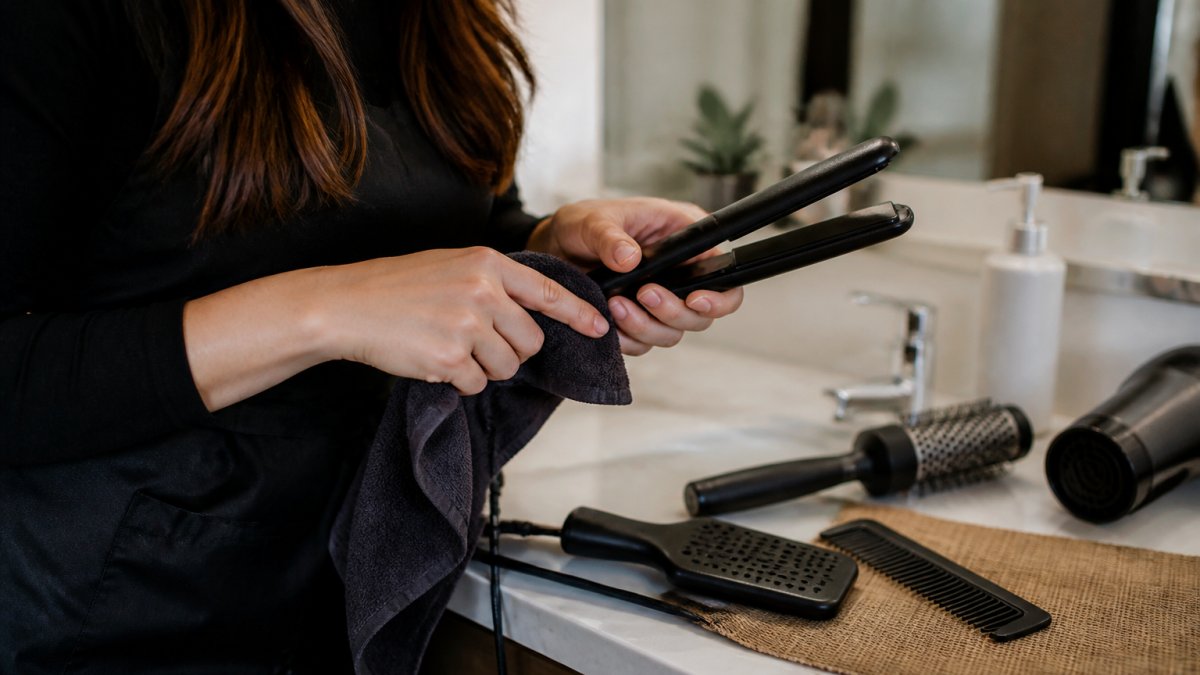
- Wipe plates and barrels after every use, once the tool has cooled completely
- Clean the air filter on your dryer monthly
- Check the cord joint for fraying or stiffness every few weeks
- Store tools unplugged and fully cooled, never coiled tightly
- Keep a heat-resistant mat or pouch for travel
- Never wrap a hot cord around the tool
- Remove product buildup from plates with a damp cloth, not abrasive cleaners
Watch out: cleaning plates while they are still hot can warp the coating and create hot spots. Always let the tool cool first.
Overnight care counts too. A satin silk bonnet sleep night cap protects hair while you sleep, which reduces the frizz and breakage that send you reaching for heat tools again in the morning. Less heat styling means less wear on both hair and tools.

A self-cleaning hair brush is a useful addition to the same routine. Its one-key cleaning function and 3D air cushion design cut down on the buildup that dulls bristles and pulls at hair.

Picking Your First Long-Lasting Hair Tool at HJ Accessories
Start with the tool you will actually use most, not the one with the longest feature list. If you straighten daily, buy a straightener with adjustable heat and a solid cord joint. If you style differently every day, a multi-styler earns its keep by replacing several single-purpose appliances.
Then apply the durability checks: reinforced cord, even heat, firm hinge, available replacement parts, and a coating that will not chip. Those five details predict lifespan better than any badge on the box.
At HJ Accessories, you can explore our collection, and we offer free shipping on orders over $25.
Frequently Asked Questions
What hair styling tools last the longest?
Tools with fewer moving parts and simple heating elements tend to outlast complex ones. A straightener or curling comb with adjustable heat and a plug-in power supply usually keeps working longer than battery-powered stylers, because there is no cell to degrade. Brushes and heat-free accessories like a satin bonnet or scalp brush can last years if cleaned regularly. The deciding factor is often how well you store and clean the tool, not the price tag alone.
How can I tell if a hair tool is well made?
Check three things: the heat setting control, the cord and the surface finish. Ask whether replacement parts are available before you buy, since a repairable tool beats a disposable one.
How do I maintain hair styling tools so they last?
Wipe plates and barrels with a soft damp cloth once they are fully cool, and never scrape them with anything abrasive. Clean brushes weekly by removing loose hair, and use a self-cleaning brush for the bulk of it. Store tools unplugged and loosely coiled rather than wrapped tight around the barrel. Keep them away from water while hot, and let them cool before packing. These hair tool maintenance tips cost nothing and prevent most early failures.
Are professional hair tools more durable than regular ones?
Not automatically. Judge tools by their build and by your care routine, not by the word professional on the box.
Which hair tools are best for everyday styling?
For daily use, pick tools that let you style at lower heat and clean up fast. The Anion Hair Care Electric Hair Curlers Hair Comb Straightener is available at $62.99, and a satin bonnet is available at $12.99.
The challenge is simple: most people buy styling tools on price and replace them long before they should. HJ Accessories makes that easier to avoid, with a curated beauty range that includes a versatile anion styling tool, a self-cleaning scalp brush, and a silk sleep bonnet, all backed by free shipping over $25. Get started with HJ Accessories and build a grooming kit that lasts.
